What is an edge device?
And why is it so crucial for IIoT?

In brief
- An edge device is a relevant component in an Industrial Internet of Things application.
- However, you can find IIoT applications where you don’t need to have one to get their benefits.
- The edge device offers automatic generation of a list of the devices in your plant. Without it, you have to add all the information manually.
- This article first starts with basic knowledge - like the difference between OT and IT.


What’s the difference between OT and IT?
Before we dive into edge devices, let’s learn the basics. What does OT and IT mean exactly?
When we talk about IT, we are referring to Information Technology. In an industrial environment, IT is responsible for all the computers in the plant, the internet and intranet infrastructure, data storage, and ensuring that the exchange of electronic data is done securely.
Now, when we use OT, we are referring to Operation Technology. OT is the network where we have instruments such as field devices, the industrial control system, monitoring equipment, and where process data is exchanged. Today, OT and IT are converging because of the Industrial Internet of Things.

What’s happening is that field devices are providing data over the Internet for analysis, and the resulting information is shown in a straightforward dashboard using cloud computing. You don’t need to collect it from the control system anymore.
Going back some years, OT was not a real networked technology. You didn’t have networking in the field. Most of the information was carried by analog signals – even today you still find a heap of 4-20mA signals out there.
Afterwards, a couple of proprietary protocols popped up at the OT level, creating digital communication between the control system and the smart field devices.
OT vs. IT
Today, the scenario in the field is different. We find digital protocols based on the Ethernet connecting all these smart sensors with the control system and the internet. And we shouldn’t forget the wireless sensors using protocols, such as Bluetooth® and WirelessHART. A wireless connection is one of the easiest ways to collect and integrate data into cloud computing.
Following the convergence of OT and IT, we have new possibilities as well as new concerns. By using cloud computing OT/IT allows the setup of an efficient monitoring solution with advanced data analysis that can be viewed from wherever you are in the plant on a simple dashboard. Regarding security concerns, vendors are working hard are to provide a reliable, secure and high-level connection between the field and cloud computing that protects against any data leaks.
Endress+Hauser's IIoT ecosystem
Compliance with recognized cybersecurity standards ensures that customers can trust the Netilion IIot ecosystem to provide a secure harbor for their data.
What is an edge device?
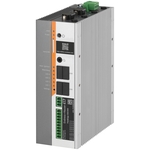
If you have a HART communication network in your plant and you are wondering how to access data without interfering in the process . An edge device is the network component responsible for connecting your local area network to an external and wide area network, where you can collect data from everywhere. Moreover, it doesn’t matter if you have a proprietary or non-proprietary network; the edge device is responsible for providing the local information to an external network. If you have different protocols, it also translates this information, making the connection between both network boundaries.

A cloud computing application must be populated with all the data from the smart devices. Depending on the service you want to use, this can be done manually by using apps to collect the data and then creating the required digital twins. To analyze diagnostics or have automatic data populating, however, the edge device is needed to make a secure connection between the field network and the cloud computing.
Imagine that you are monitoring process values using an edge device and cloud computing when one day the internet connecting the edge device and cloud crashes. What happens next? Well, nothing actually – the edge device will store all the information until you have established the connection again, so you won’t lose any process information.
A point to remember though: not all edge devices offer local storage. Whether you need it depends on the application and service you want to implement on your plant — a case of horses for courses, offering the same advantages when correctly selected.
Considering all the facts about edge devices, they provide a straightforward integration and high-level security in their communication. Since they open a second channel for transferring data, there is no impact on the process control system.